You Don’t Have a Marketing Problem. You Have a Positioning Drift.
Positioning is one of the most powerful forces in branding, and one of the least understood. It isn’t your logo, your content style or how often you post.
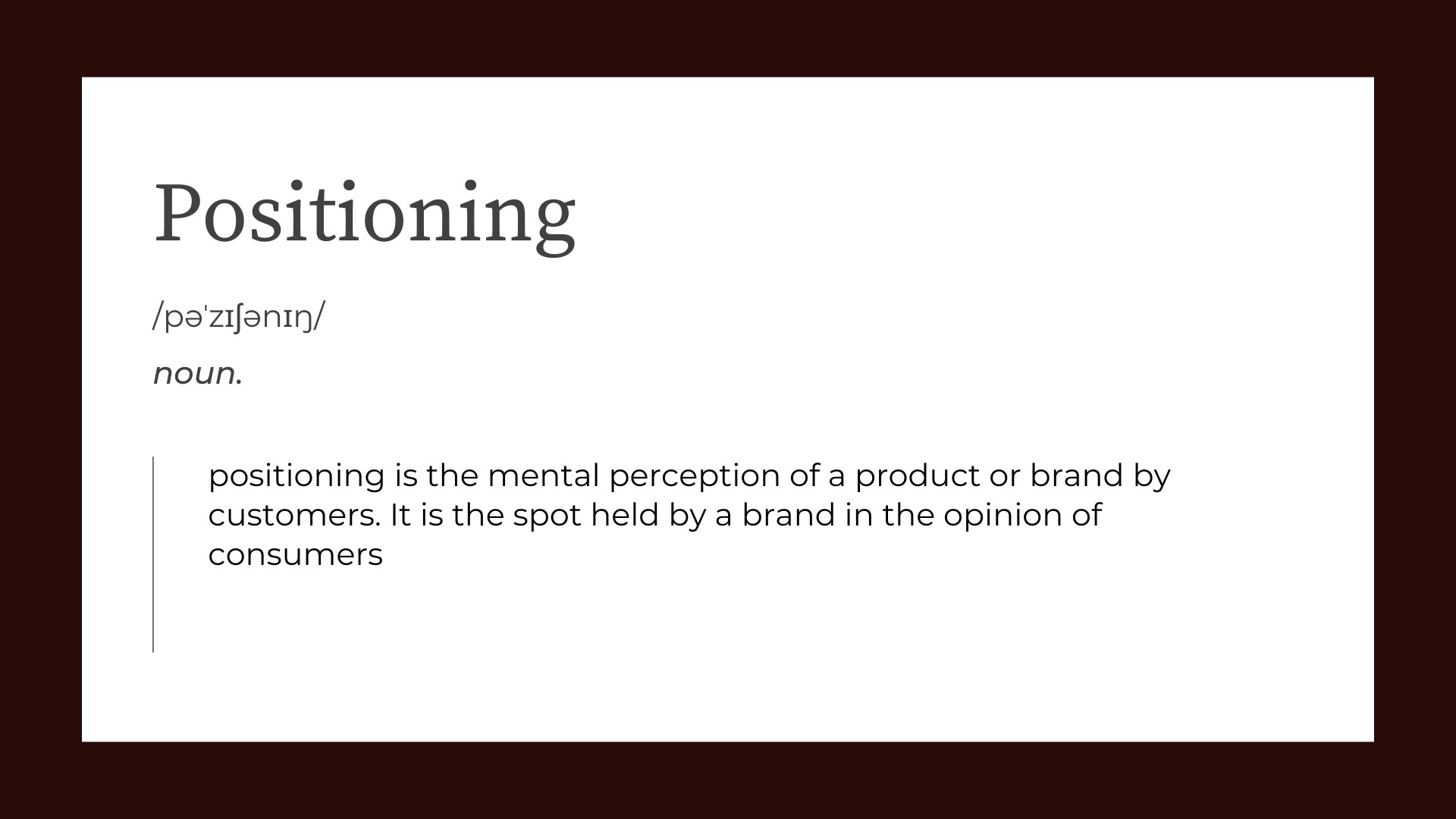
Positioning is the spot your brand occupies in the buyer’s mind. When someone hears your brand name, what do they instantly associate it with? Premium? Affordable? Innovative? Safe? Trendy? Reliable? That immediate association is your positioning. And if there is no clear association, that’s a positioning problem.
Most brands are running fast in the wrong direction and confusing “being seen” with “being understood.” You can post consistently, run ads monthly, jump on trending formats, increase your content output, yet, still feel stuck.
Marketing tends to focus on reach:
“How do we get more eyes?”
Positioning asks a quieter, more strategic question:
“What do those eyes see when they get here?”
And when the market isn’t sure where to place you, it defaults to the nearest familiar category: the Generic bucket.

Why Positioning Matters More Than You Think
Positioning determines:
Whether people understand what you do
Whether they compare you on price or on value
Whether you attract aligned clients or constant negotiations
Whether your marketing compounds or constantly resets
If a customer cannot clearly explain what your brand does and why it’s different, your positioning is off. Marketing amplifies whatever positioning already exists, so if clarity exists, it amplifies clarity, and if confusion exists, it amplifies confusion. When positioning is unclear, everything feels harder. This is called the Positioning Drift.
What Is Positioning Drift?
Positioning drift is the slow, almost invisible misalignment between who your brand was meant to be and how it currently shows up. Positioning drift is rarely intentional. It’s usually a response to pressure. It happens gradually:
A trend-chasing reel here.
A discounted offer there.
A caption that sounds like everyone else.
A pivot because “this is what’s working right now.”
Individually, these decisions feel smart. Collectively, they blur your brand.
Auditing your positioning
If positioning drift is the problem, correction must be intentional. Here’s a simple 3-step audit to recalibrate:
Diagnose the Perception Gap
Before you fix anything, you need to understand how your brand is currently positioned in the market’s mind, not how you think it’s positioned.
Ask three groups:
Your Audience. Ask 5–10 customers or followers:
What do we do?
Who do you think we are for?
Why would someone choose us?
How would you describe us in one sentence?
Patterns matter more than perfect answers. If responses are inconsistent, vague, or heavily price-focused, clarity has drifted.
Your Team. Ask internally:
What category do we belong to?
Are we premium, mid-tier, or mass?
What do we want to be known for?
If internal answers differ, external confusion is guaranteed.
Your Content. Review your last 20 posts. Can a stranger clearly identify:
Your target audience?
Your positioning (premium, niche, accessible, etc.)?
Your distinct angle?
If not, the perception gap is real.
2. Identify the Drift Points
Now look for what caused the blur. Positioning drift usually leaves fingerprints. You want to pinpoint the exact decisions that diluted your positioning.
Check the last 3–6 months and ask:
Did we pivot tone to match trends?
Did we expand our audience too broadly?
Did we introduce offers that contradict our claimed position?
Did we change messaging based on short-term performance?
Look specifically at your
Pricing behavior
Offer structure
Tone of voice
Visual consistency
Target audience expansion
Most brands don’t drift because of one big decision. They drift because of small tactical shifts made repeatedly.
3. Reclaim & Reinforce Your Position
Clarity requires boundaries. You now need to re-establish your guardrails. Define clearly and in writing:
Category:
What space do we compete in? What do we not compete in?Audience:
Who are we specifically for? Who are we not for?Value Signal:
What makes us different beyond price?Price Identity:
Are we premium, mid-tier, or accessible?
Does our behavior reflect that?Tone & Visual Language:
Does our communication consistently reinforce the position we claim?
Then apply a simple filter going forward: Does this decision strengthen our position or blur it?
This is where most correction happens, not by adding more, but by removing misaligned elements.
Final Thoughts
You don’t fix positioning drift with more marketing. You fix it with sharper clarity. The goal is not just to be seen. It’s to be placed correctly in the mind of the market: clearly, confidently, and intentionally, because when the market knows exactly where to place you, growth becomes simpler.