The Gen Z Intern as a Marketing Strategy

‘Gen Z’ typically refers to people born between the late 1990s and early 2010s. They’re often described as digitally native, culturally aware, outspoken, purpose-driven, and big on flexibility and work-life balance. More importantly, they’ve shaped how communication works online. They don’t just consume content. They remix it, respond to it, and expect brands to meet them at their level.
For years, brands tried to sound polished, professional, safe. Now, they’re tweeting like interns. Not just any intern, a very specific one: the Gen Z employee.
They’re self-aware, slightly chaotic, chronically online, and they use humour as a language. Whether or not they actually exist inside the company, brands are starting to sound like them.
So, let’s talk about it.
The “Gen Z Intern” Isn’t Always an Employee. It’s a Marketing Strategy
The “Gen Z intern” isn’t always a real person on payroll. It’s a persona.
A voice that brands adopt to feel more relatable, more current, and more in touch with internet culture. Instead of sounding like a company, brands now sound like someone who works at the company, or at least someone you think works there.
It’s familiar. It’s informal. It feels relatable.
And that’s the point.
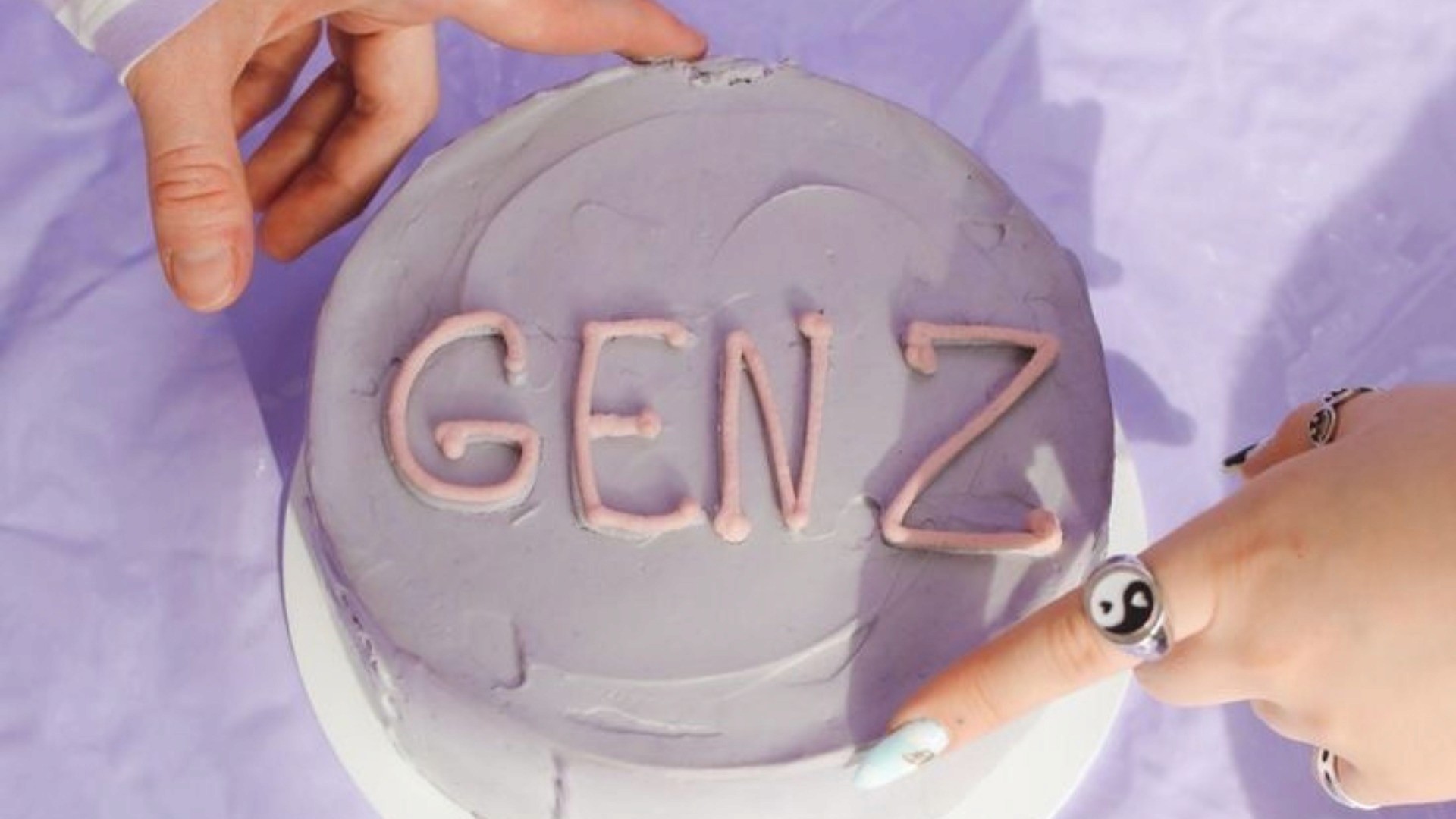
What The Gen Z Intern Looks Like
You’ve probably seen it:
Casual, unserious tone
Lowercase captions, slang, and internet language
Jumping on trends quickly
Self-aware humour (sometimes even making fun of the brand itself)
The “intern is running this account” energy
It’s basically a modern brand mascot, except instead of a character, it’s based on an entire generation’s personality. Some brands have fully embraced this style:
Duolingo: chaotic, unpredictable, and very online
Ryanair: low-effort visuals, high-impact humour
Wendy’s: sarcastic, bold, and intentionally unserious
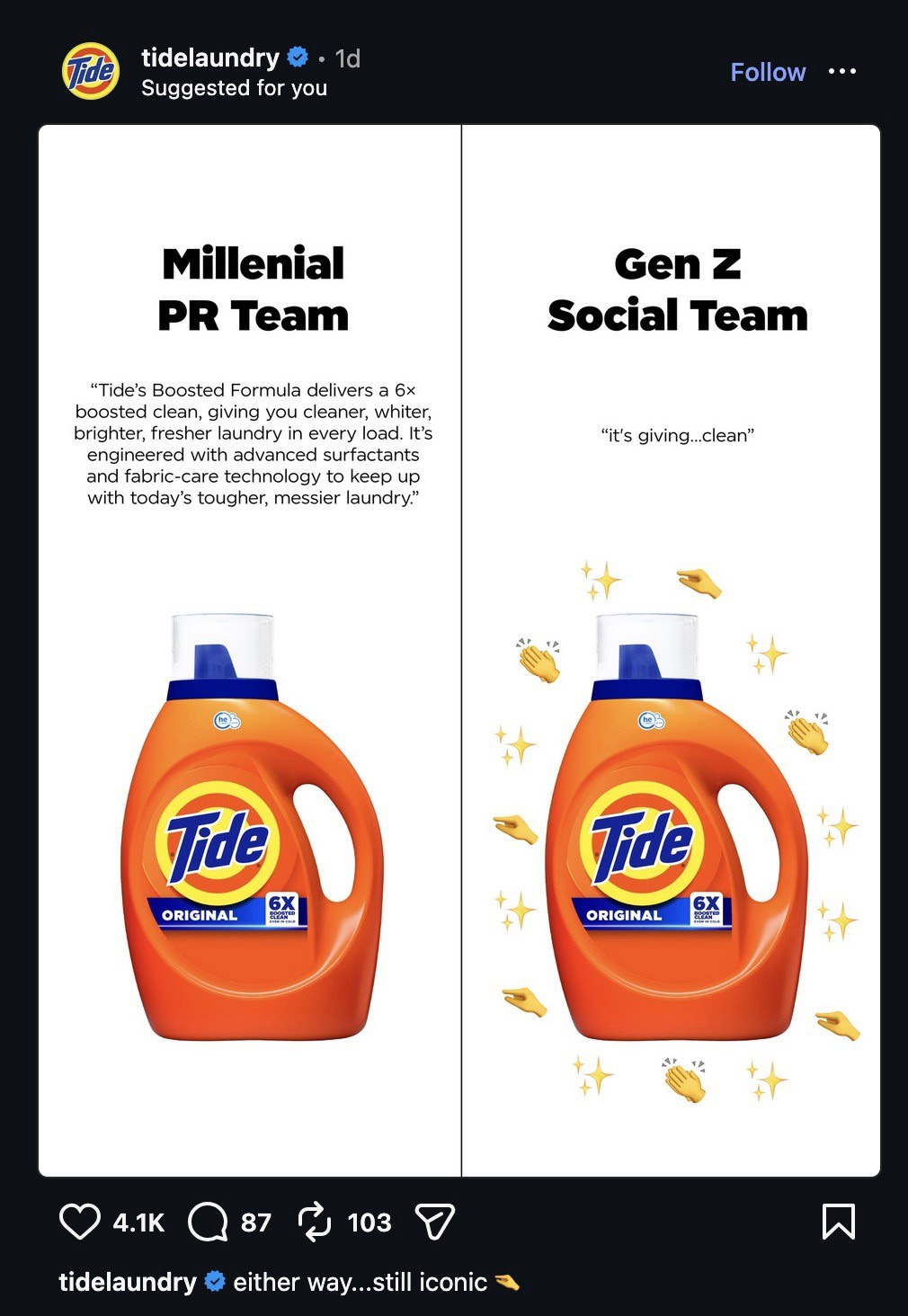
More recently, brands like Tide have even turned it into a format, contrasting “what Gen Z would say” vs “what the brand would say.” At this point, it’s not random. It’s a strategy.
So… Is This Just a Phase?
When done well, the Gen Z intern approach works because it:
Blends into the content people already consume
Feels human, not corporate
Encourages interaction instead of just broadcasting
Signals cultural awareness
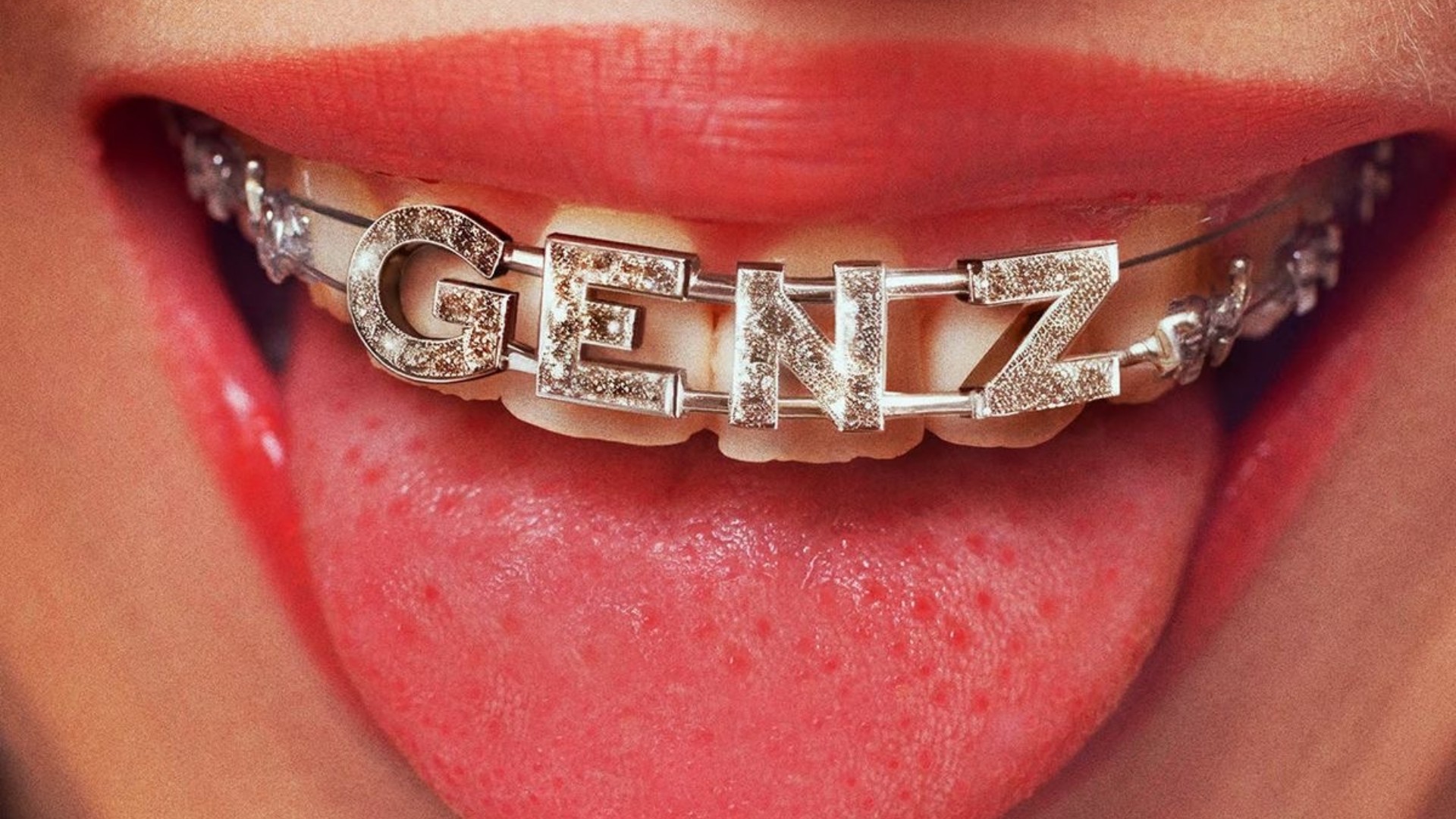
However, not every brand should do this because what makes this approach work isn’t just the tone. It’s the understanding behind it. It also raises a bigger question: Are we witnessing a real, long-term shift in how brands communicate? Or is Gen Z just the current “cultural reference point” everyone is borrowing from?
Because eventually, Gen Z won’t be the youngest or most culturally dominant audience anymore. What happens then?
Final Thoughts
The more this strategy is used, the more it risks reducing an entire generation into a set of clichés. Slang, tone, humour, and “relatability” that can start to feel… recycled.
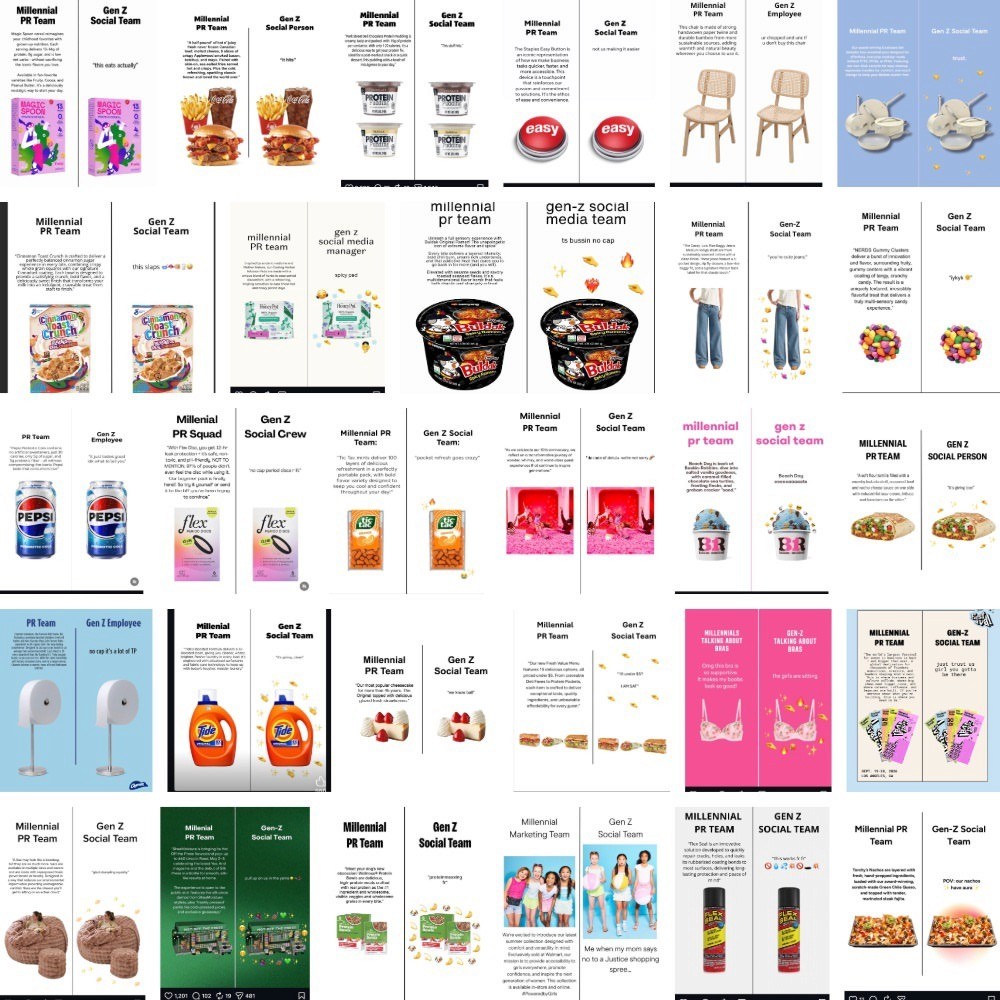
At some point, it stops feeling like culture, and starts feeling like a script. We’ve already seen pushback around this. In response to a recent Tide campaign, one critique read:
“Can we not perpetuate false generational stereotypes in advertising?
Didn’t millennials push against this same kind of trite ad copy?
Does Gen Z — or any generation — actually enjoy being reduced to clichés of slang?”
It’s a fair question.
Because while the “Gen Z intern” voice is meant to feel human, it can quickly turn into caricature, becoming less relatable and more reductive.
So yes, it works, but it’s also a bit of a double-edged sword.